
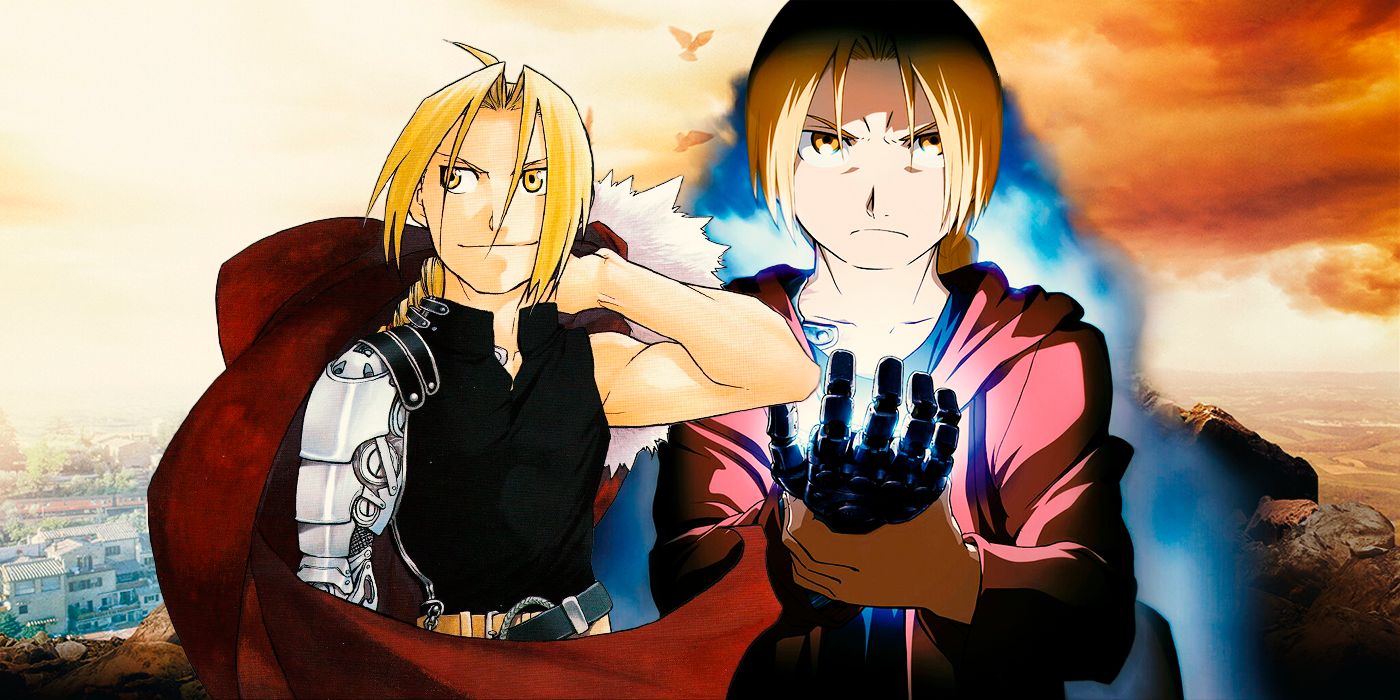
The Debate Between Fullmetal Alchemist and Brotherhood
Fullmetal Alchemist is widely regarded as one of the greatest manga and anime of all time. The story of the Elric brothers, Edward and Alphonse, as they search for a way to restore their bodies, only to stumble into a deeper conspiracy that puts the entire continent at risk, has resonated with audiences for years. With two anime adaptations to choose from, many fans find themselves asking about the difference between Fullmetal Alchemist and Brotherhood.
While both are based on the same story, there are drastic differences between them. For those interested in diving in, one adaptation adheres more closely to the original manga's storyline, while the other delves further into ideas that were only briefly touched upon. These stark differences are ultimately what drive the debate between the two series.
Faithfulness to the Manga: A Key Distinction
The core difference between Fullmetal Alchemist and Brotherhood lies in how liberally they adapt Hiromu Arakawa’s manga. When the first Fullmetal Alchemist series premiered in October 2003, only five volumes of the manga had been released, with the sixth arriving later that month. By the time the anime ended in October 2004, eight volumes had been published. That means Bones, the animation studio behind Fullmetal Alchemist, had only a fragment of the eventual 27-volume manga to adapt.
By contrast, Fullmetal Alchemist: Brotherhood's final episode aired in time with the release of the manga's final chapter. Brotherhood was intended to be a more faithful adaptation. To use a common point of comparison, both series adapt the events of the manga until Maes Hughes' death, only to veer off in different directions afterward. Therefore, it is accurate to say that Fullmetal Alchemist after episode 26 and Fullmetal Alchemist: Brotherhood after episode 10 tell entirely different stories.
The original series makes decisions that further expand events and characters. Extra time was spent fleshing out Barry the Chopper and Shou Tucker, so fans got to know them better. The Brotherhood anime remake, meanwhile, introduces these supporting antagonists at the moment they are relevant to the story. Of all the minor characters to have their roles altered, Rose's changes were the most drastic. She goes from a minor character introduced near the start to a linchpin of the villain Dante's entire plan. Rose is brutalized and used as a vessel for Dante once she obtains the Philosopher's Stone.
Even in the early episodes, a lot of content is added that isn't present in the manga. For instance, Russell and Fletcher Tringham are characters taken from the light novel The Land of Sand instead of the manga. However, some manga characters, like Olivier Mira Armstrong, don't appear in the original anime. In fact, a common complaint is that the women in the original series, like Winry and Riza, aren't given the same level of development or importance to the plot as they are in Brotherhood. They are more like background characters, which didn't give them an opportunity to grow. This creates a major contrast when it comes to FMA vs. Brotherhood.
Homunculi: A Tale of Two Series
Another difference between FMA and FMAB is how the main villains are handled. The Homunculi serve as primary antagonists in both anime, although their creators and even identities shift from series to series. Each Homunculus is named for one of the seven deadly sins. In both anime, Lust, Gluttony, and Envy remain essentially the same, although Lust in the original plays the role of primary antagonist, with a massively expanded role. By contrast, Lust is the first to die in Brotherhood.
Meanwhile, Pride, Wrath, Sloth, and Envy are entirely different. In Brotherhood, Wrath is Fuhrer Bradley, while Pride is his son; however, in the original anime, Bradley is Pride. In FMA, Wrath is a failed transmutation of Ed and Al's mentor, Izumi, while Greed is created by Izumi's mentor. Arguably, most startling of all is Sloth, who in the original is actually Ed and Al's mother.
That leads, of course, to how Homunculi are created. In Brotherhood and the manga, all the Homunculi are created by Father, the true antagonist. In the original anime, a Homunculus is created from a failed human transmutation that was found and re-christened by Dante. Ed and Al make Sloth near the start of FMA, while in FMAB, their re-alchemized mother ends up being just a mess of flesh. In addition, because each Homunculus is a re-creation of previous humans, when a Homunculus comes in contact with a remnant of their former selves in the original series, they are extra-vulnerable.
Although there are many other smaller differences when it comes to Fullmetal Alchemist: Brotherhood vs. Fullmetal Alchemist, the last drastic one is the identity of the final villains. Dante and Father both have ties to Hohenheim, and Dante is a former immortal lover of Ed and Al's father. Father is tied with his origins as an alchemist and immortal, and while Father creates the Homunculi, Dante simply stumbles upon them. Their plans are different, and as the series becomes increasingly centered around their goals and wants, the plots further divide.
Endings: The Final Divide
Undeniably, the biggest difference between FMA and FMAB is where each one ends. Brotherhood faithfully adapts the manga's ending, tying up every plot point and character in a beautiful fashion. It feels organic, weaving in all the previously introduced elements of the story and providing natural closure. The original, however, ends with its movie, Conqueror of Shamballa, which is bizarre, to say the least.
The events of the film send Ed into an alternate dimension, where he tries to survive in what is essentially Nazi Germany. Sought and chased by alternate universe doppelgängers, the ending sees many of the characters scattered across dimensions. Greed takes on a new transformation, and the film even features a bizarre — and deeply unwelcome — cameo by none other than Hitler. The original anime's ending rubbed many viewers the wrong way. That's not to say the Fullmetal Alchemist anime is bad. It can be considered incomplete, in a way, or simply different from Fullmetal Alchemist: Brotherhood and the manga that inspired it.
Is the Original Fullmetal Alchemist Worth Watching?
Since Brotherhood's release, FMAB has become known as one of the best anime ever. Not only is it a great starting point for anime, but it's also become a must-watch for any anime fan. As such, there are actually quite a lot of FMAB fans who have never seen the original FMA, and many viewers don't even bother to give it a try. So, that begs the question if the original series is even worth watching at a certain point. Just because FMAB has become the favorite child, doesn't mean that FMA has nothing to offer.
In fact, there is still a dedicated fanbase for FMA. FMAB handles its story and characters incredibly (boasting some of the best-written anime characters), but some viewers praise the original series for being much more unique with its direction, as opposed to the typical shonen feel of FMAB. FMAB has tons of action and, with it, long-lasting fights. FMA does have action and fights, but they're not nearly as drawn-out, which almost perfectly captures the fast-paced feeling of real fights. Every second and every move counts.
FMA also has a particular focus on the drama and dark aspects of the story. This focus isn’t to say FMAB is light and fluffy, but there's a noticeable difference in tone and storytelling between FMA and FMAB. Honestly, one of the biggest deciding factors for FMAB being "better" is that it just struck gold with its viewers. Many fans who watched the first series when it aired still stand behind it. Conversely, those who have been spoiled by FMAB can definitely still enjoy FMA.
FMA ends up having a different story, and it allows fans of FMAB to see new sides of the world and its characters. Ultimately, FMA and FMAB are regarded as separate canons, and, therefore, can be enjoyed without comparing them to the point that one becomes unwatchable.
Post a Comment