
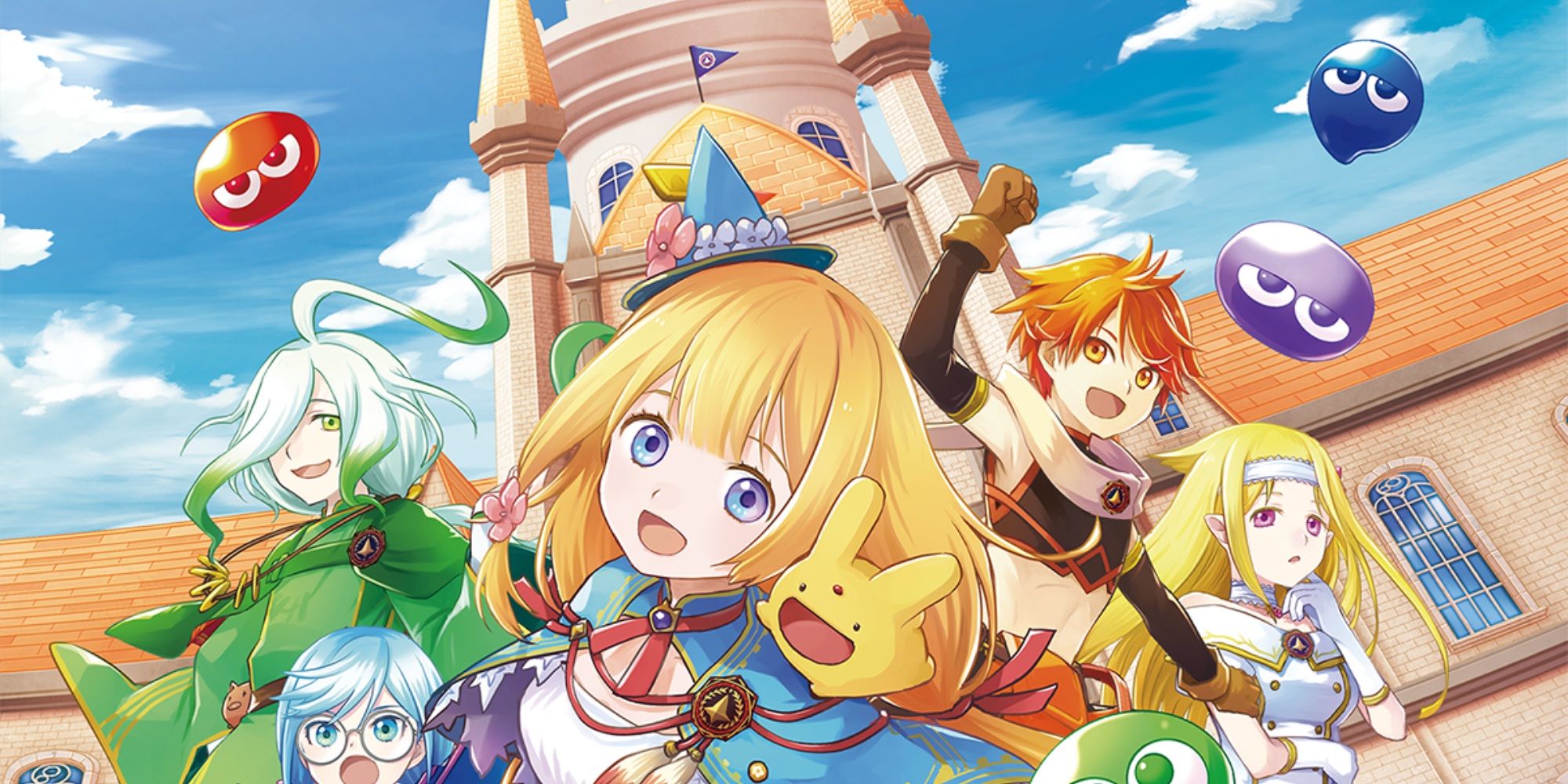
A Simple and Charming RPG for the Young at Heart
Mado Monogatari: Fia and the Wondrous Academy feels like an RPG designed for children. It lacks a lot of depth, and the characters often come across as one-dimensional. The constant whining from Fia and her friends can become tiresome after a while, leading players to close the game and return later. However, despite these shortcomings, there is something that keeps drawing players back.
The game’s storyline isn’t particularly deep, but its slice-of-life approach, where students attend a magical school, has a charm that is hard to ignore. There's even a crafting system that allows players to plant vegetables and use fertilizer to help the school’s tree grow. In a gaming world filled with complex narratives, expansive open worlds, and lengthy gameplay, it's refreshing to experience a game that doesn't take itself too seriously and instead focuses on the fundamentals that make the RPG genre so appealing.
Characters That Are Not Always Memorable
In Mado Monogatari: Fia and the Wondrous Academy, you play as a freshman in a magical school. Unfortunately, things don’t start off well, as Fia ends up in a group of delinquent students who some professors seem eager to expel. Most of the characters Fia meets are fairly one-dimensional. One of the more interesting party members is Will, a red-haired boy who dreams of becoming a hero. While he can be loud and boisterous, the game reveals a hidden intelligence beneath his bravado.
Leena, another character, is similar to Hermione Granger from Harry Potter. She starts off prickly but gradually opens up to Fia and her friends, making her endearing over time. These two characters stand out among the rest.
However, Totto and Eska are less enjoyable. Totto appears friendly at first but constantly tries to take advantage of Fia, which becomes irritating quickly. Eska, on the other hand, is problematic. She initially wants to defeat Fia, then develops an obsession with her, leading to bizarre and uncomfortable behavior. Her actions are confusing and off-putting, especially given her background as a Dragonewt with unique traditions.
Combat That Falls Short
The combat system in Mado Monogatari: Fia and the Wondrous Academy is functional but not particularly engaging. Players have access to various elemental spells, such as fire and water, which can be used to defeat enemies. Each enemy has a specific weakness, which adds a layer of strategy. However, the spells themselves aren’t very impressive and lack visual flair.
The game also includes an active time bar, similar to Final Fantasy XII, which dictates when players can act during battles. Dodging attacks can be awkward, and aiming spells can feel cumbersome. Direct attacks with weapons like a spear or sword feel weak, almost like poking enemies rather than striking them effectively.
While players can control their allies through the tactics menu, they often do a decent job of keeping the player healed. However, the combat overall feels sloppy and repetitive, with the same enemies appearing over and over again.
Dungeons and Loot That Could Be Better
Dungeon exploration is a key part of many RPGs, but Mado Monogatari falls short in this area. Unlike games like Diablo, where exploring leads to rewarding loot, this game offers little incentive beyond collecting resources like steel ore or seeds. There’s no sense of excitement in discovering new weapons or spells, which makes the dungeon-crawling experience feel underwhelming.
That said, the dungeons do have some interesting hazards, such as swinging blades and spikes that reduce energy. These elements provide a slight change of pace. However, the overall design of the dungeons lacks uniqueness, feeling more like generic environments with minimal thematic variation.
Visuals and Soundtrack
The game’s visuals are bright and colorful, with chibi-style character models that fit the whimsical tone. However, the animation is limited, and characters often fail to express emotions properly. For example, Leena might say something kind but still maintain a moody expression, which feels inconsistent.
The environmental art is basic, though some areas like the library and principal’s office have interactive objects. The music is pleasant, with charming melodies in cutscenes and energetic tracks during dungeon crawling. However, the battle theme is forgettable, and an English dub would have been a welcome addition to avoid Fia’s high-pitched voice.
Final Thoughts
Mado Monogatari: Fia and the Wondrous Academy is a game that struggles to recommend due to its dull combat, repetitive enemies, uninspired dungeons, and lackluster plot. However, it does have its moments, particularly with the three main characters and its anime aesthetic. Despite its flaws, there’s something about the game that keeps players coming back, whether it's the camaraderie between the characters or the desire to see them succeed in their magical academic journey.
Post a Comment