
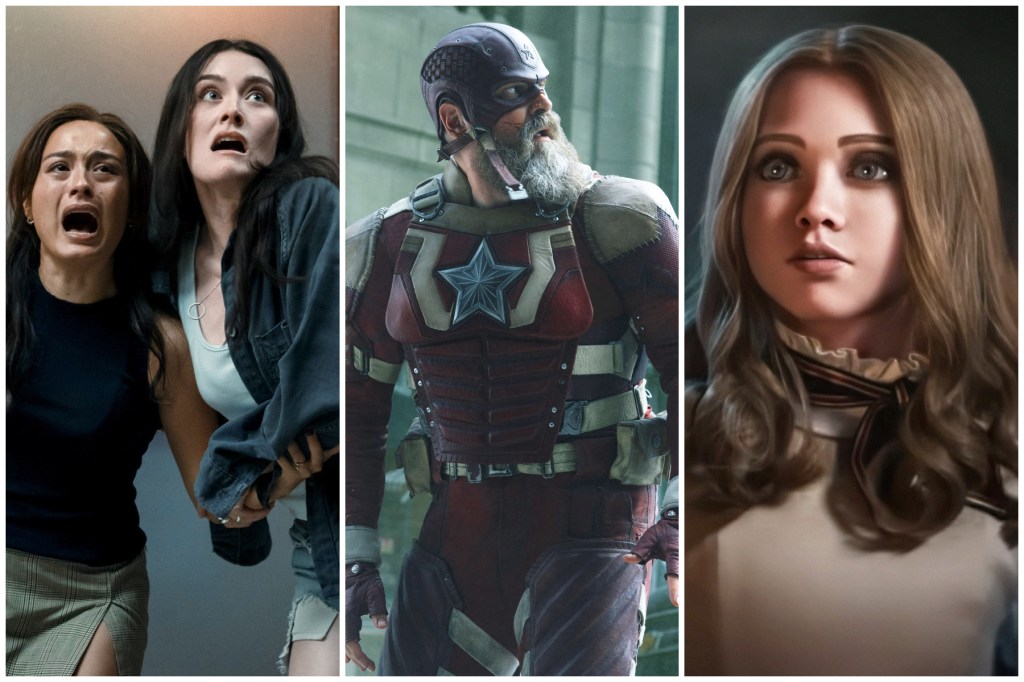
The Evolution of Superhero and Horror Films in Hollywood
Hollywood has long relied on two dominant genres: superheroes and horror. These categories have consistently drawn large audiences, but recent trends suggest that both are facing challenges. While fans still enjoy these genres, the quality of the offerings has become a critical factor in determining box office success.
Mike Barstow, executive VP of Midwest-based ACX Cinemas, notes that "people haven't stopped loving horror or superhero films, but they stopped loving mediocre entries in those worlds." This shift in audience expectations means that filmmakers must now deliver higher-quality content to capture attention.
Analysts believe that both genres have reached an oversaturation point. Despite this, some films continue to thrive. Recent successes include "Sinners" ($365 million), "Superman" ($426 million to date), and "Final Destination: Bloodlines" ($285 million). However, these films are no longer guaranteed to be blockbusters, indicating a need for innovation and originality.
The Challenges Facing Horror Films
Horror movies have traditionally been a safe bet due to their low budgets and potential for high returns. They also benefit from the communal experience of watching jump scares on the big screen. In the early post-pandemic period, films like "A Quiet Place Part II," "Halloween Kills," and "The Conjuring: The Devil Made Me Do It" were among the first to see strong box office performance, driven by younger audiences.
However, the genre is now facing a plateau. Several recent horror films have underperformed, including Blumhouse's "M3GAN 2.0," "Wolf Man," "The Woman in the Yard," and "Drop." Other films such as Sony's "I Know What You Did Last Summer" and Warner Bros.' "Companion" also struggled at the box office. According to Shawn Robbins of Fandango, "We're seeing a rut where five or so consecutive movies have performed within a similar range."
Jason Blum, founder of Blumhouse, believes that there is a limit to how many horror films can coexist in the market. He suggests that the industry is moving away from the previous model of releasing 12 to 15 horror movies annually. Instead, he emphasizes the need for boundary-pushing stories that can break through the current ceiling.
Recent successes like "Sinners" and "Longlegs" highlight the importance of originality. Allen Michaan, owner of Oakland's Grand Lake Theatre, notes that "Sinners" was successful because it offered something different beyond just being a horror film. Upcoming releases such as Zach Cregger's "Weapons" and Jordan Peele-produced "Him" will need to replicate this success to disrupt the genre's holding pattern.
The Struggles of Superhero Films
Superhero fatigue has also become apparent, particularly after the pandemic. The influx of interconnected TV shows alongside big-screen releases has led to audience saturation. For years, Marvel's Cinematic Universe (MCU) could count on any hero to generate a blockbuster hit. However, recent films like "Captain America: Brave New World" and "Thunderbolts" have shown that even Marvel is not immune to failure.
Kevin Feige, Marvel's boss, recently acknowledged the challenge of producing so many stories in a short time. Between 2007 and 2019, Marvel produced 50 hours of stories, but since 2019's "Avengers: Endgame," the studio has created over 100 hours of content in half the time. This rapid production schedule has led to a sense of monotony among audiences.
Allen Michaan points out that many Marvel films follow a similar formula, often ending with lengthy fight sequences that can feel repetitive. He notes that his wife and he sometimes leave when the action scenes start, knowing how they will end. However, the new "Superman" film has resonated with audiences because it offers a different story, featuring vulnerability and moments of defeat that are rare in other DC films.
The Future of Superhero Films
Despite the challenges, superhero films remain a major force in Hollywood. The most established characters continue to draw large audiences, with recent successes including "Deadpool & Wolverine," "Doctor Strange in the Multiverse of Madness," "Black Panther: Wakanda Forever," and "Spider-Man: No Way Home."
DC faces its own set of challenges, as the studio works to regain fan confidence after recent misfires such as "The Flash" and "Aquaman and the Lost Kingdom." While "Superman" has been a step in the right direction, the next films, including 2026's "Supergirl" and "Clayface," may struggle without the same level of recognition.
David A. Gross of Franchise Entertainment Research notes that while superheroes are still major attractions, interest tends to decline beyond the most popular characters. As the industry continues to evolve, the need for fresh ideas and unique storytelling becomes more critical than ever.
Conclusion
Both superhero and horror films face significant challenges in today's Hollywood landscape. While these genres remain popular, audiences are demanding higher quality and more originality. Filmmakers must find ways to innovate and stand out in a crowded market. Whether through groundbreaking stories, unique character development, or creative visuals, the future of these genres depends on their ability to adapt and meet evolving audience expectations.
Post a Comment